I have a tennis and pickleball conditioning class at the club, one hour, once a week. Same room every time: a woman who plays tournament pickleball three days a week, and a man who picked up a paddle for the first time this spring after his knee replacement. Same class. Same hour. Same exercises, if I’m being honest about how most of these classes get built.
That’s the problem. It just doesn’t look like a problem until someone gets hurt or someone stops showing up.
The room punishes whichever way you pick
Build the class for the tournament player and the beginner either pushes through something they shouldn’t, or spends the whole hour standing off to the side modifying in front of everyone. Build it for the beginner and the advanced player is doing lateral bounds at half intensity, bored, and gone in three weeks because the class isn’t doing anything for their game anymore.
Most coaches solve this by picking a lane and living with the loss. Either the class skews easy and slowly bleeds its strongest members, or it skews hard and the club gets a complaint, or worse, an injury, from someone who never should have been doing that rep count.
Telling someone to “modify if you need to” doesn’t work
The instinct is to give people permission to scale down. Say it at the start of class, offer the easier version, let people opt themselves in. In practice, almost nobody takes you up on it in front of a room full of people they play with every week. Pride does more damage in a group class than in any one-on-one session I’ve ever run. The beginner will do the hard version badly before they’ll do the easy version visibly.
What actually works: nobody chooses, because nobody has to
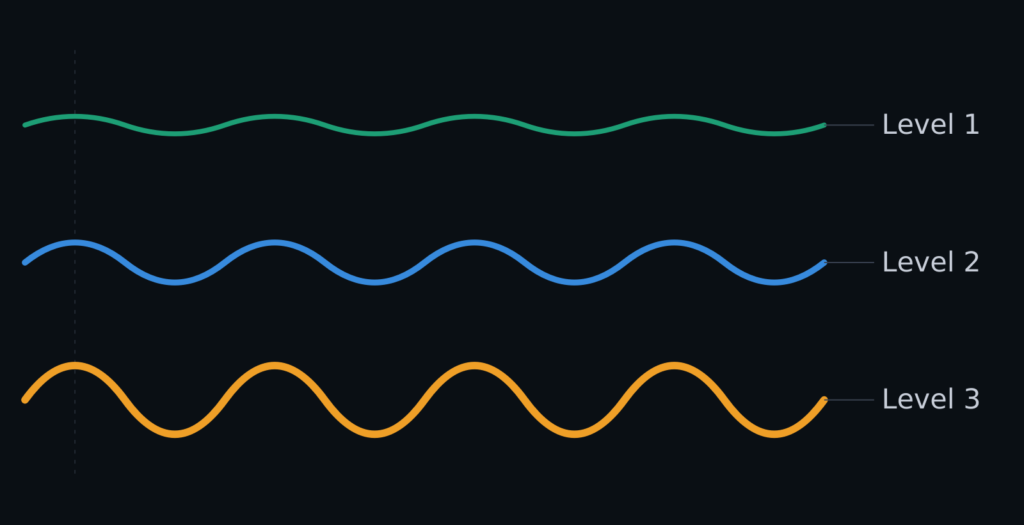
The fix isn’t giving people an out. It’s building every exercise with the level baked in from the start, cued together, so the whole room is doing the same movement pattern at the same time, just scaled differently. Lateral shuffle for everyone, one person doing a controlled step-touch, another doing a fast direction-change drill. Same drill, same energy in the room. Nobody’s standing at the back doing “the easy one.”
That single shift, level built into the exercise instead of bolted on as an option, is what keeps the tournament player engaged and the post-surgery beginner safe, in the same sixty minutes, without either of them feeling singled out.
This is exactly what the Collective Engine builds for me now
Every exercise now comes out of the Collective Engine with its own scaled tiers already attached, plus quick swaps for common trouble spots, knees, backs, shoulders, balance, so I’m not improvising a modification out loud while the room watches. I still run the class. I still make the calls in the moment. I’m just not spending Sunday night writing three different classes disguised as one.
Whether your group classes follow a season or run year-round, this is the kind of class that fills a room and keeps it full, if it’s actually built for the room you have instead of the room you wish you had.
Ramses
Personal Trainer and Group Fitness Instructor